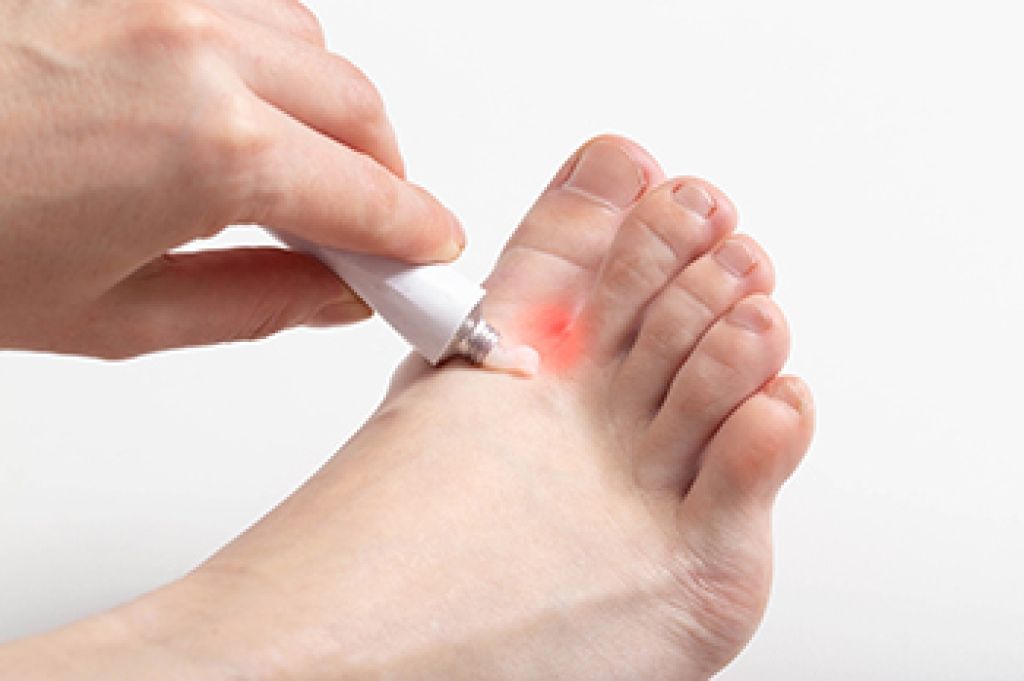
Athlete’s foot is a fungal skin infection that begins between the toes. The fungus grows in warm, damp places and can spread through contact with contaminated surfaces. Locker-room floors, showers, and pool areas are sources of exposure. Shoes that trap heat and moisture can create conditions that allow fungus to grow. Symptoms include itching, burning, and peeling skin. The affected area may also become red, cracked, or sore. Some infections spread across the sole or along the sides of the foot. Small, fluid-filled blisters can appear in certain cases.
Although an athlete’s foot infection can seem minor, it should not be ignored. Cracks in the skin can allow bacteria to enter and cause a serious infection. This risk is greater for patients with diabetes, poor circulation, or a weakened immune system. Athlete’s foot can also spread to the toenails, hands, or other areas of the body. Because eczema and other skin problems can cause similar symptoms, an accurate diagnosis is important. A podiatrist can examine the skin and determine whether a fungal infection is present. In some cases, a small skin sample is tested to confirm the cause.
A podiatrist can recommend treatment based on the location and severity of the infection. The podiatrist can also check for nail involvement, bacterial infection, or skin damage that requires closer attention. Guidance can be provided on keeping the feet dry and reducing the chance of another infection. This includes choosing breathable shoes, changing damp socks, and protecting the feet in shared bathing areas. Shoes should fit properly and allow enough room around the toes. Patients should seek prompt care when symptoms keep returning or begin to spread. Swelling, drainage, or increasing pain also requires professional evaluation. Early diagnosis can shorten the infection and help protect the surrounding skin and nails. If you have symptoms of an athlete’s foot infection, it is important that you schedule an appointment with a podiatrist effective relief and treatment solutions.
Athlete’s foot is an inconvenient condition that can be easily reduced with the proper treatment. If you have any concerns about your feet and ankles, contact Kristopher Jerry, DPM from Podiatry Health Services . Our doctor will treat your foot and ankle needs.
Athlete’s Foot: The Sole Story
Athlete's foot, also known as tinea pedis, can be an extremely contagious foot infection. It is commonly contracted in public changing areas and bathrooms, dormitory style living quarters, around locker rooms and public swimming pools, or anywhere your feet often come into contact with other people.
Solutions to Combat Athlete’s Foot
- Hydrate your feet by using lotion
- Exfoliate
- Buff off nails
- Use of anti-fungal products
- Examine your feet and visit your doctor if any suspicious blisters or cuts develop
Athlete’s foot can cause many irritating symptoms such as dry and flaking skin, itching, and redness. Some more severe symptoms can include bleeding and cracked skin, intense itching and burning, and even pain when walking. In the worst cases, Athlete’s foot can cause blistering as well. Speak to your podiatrist for a better understanding of the different causes of Athlete’s foot, as well as help in determining which treatment options are best for you.
If you have any questions please feel free to contact our offices located in Port St Lucie, and Hollywood, FL . We offer the newest diagnostic and treatment technologies for all your foot and ankle needs.
